




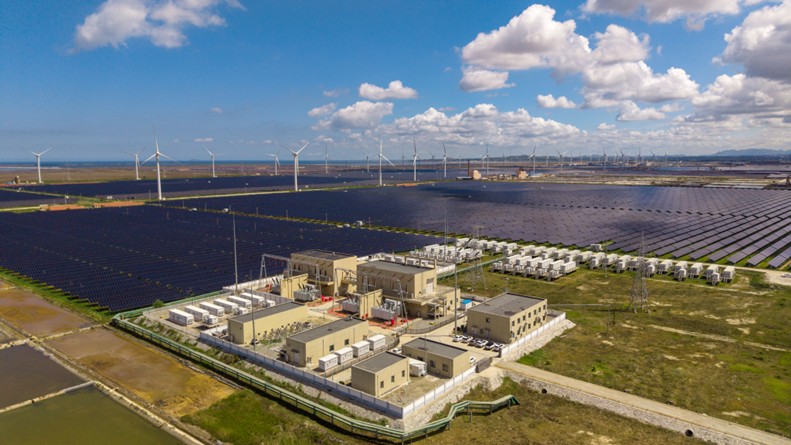
Solar and Wind Just Got a New Rulebook
Solar: The Tariff Regime Just Reset, Twice
For eight years, the Section 201 safeguard tariff was the baseline cost of importing crystalline silicon solar cells and modules into the U.S.: 30% at its 2018 start, stepped down annually to 14.75%, and legally required to sunset. It expired on February 6, 2026.
The relief was short-lived. On August 6, 2026, a new Section 232 action replaced it with a broader regime covering the full chain from polysilicon to finished modules: minimum import prices on polysilicon, wafers, cells, and modules, layered with an additional 15% ad valorem tariff for most countries of origin, with a compliance deadline of December 4, 2026. Underneath that, the older antidumping and countervailing duties on Southeast Asian producers remain very much alive: countervailing duties up to 3,404% for Cambodia and antidumping duties up to 271% for Vietnam, closing the transshipment routes that had let Chinese-origin cells reach the U.S. at competitive prices for the better part of a decade.
Layer in FEOC (Foreign Entity of Concern) restrictions, effective January 1, 2026, which limit full investment tax credit eligibility for projects with material assistance from China, Russia, Iran, or North Korea, and procurement teams are now underwriting country-of-origin risk at every tier of the supply chain, not just at the module level.
The Reshoring Race Is Real, But It’s Uneven
Domestic module manufacturing capacity has grown from 8 GW before federal manufacturing credits to 69.9 GW as of mid-2026 (north of 750% growth), and the U.S. is, for the first time in over a decade, producing every major link in the chain domestically: polysilicon, ingots, wafers, cells, and modules.
The gap is upstream. Domestic cell production capacity trails module capacity by a wide margin, meaning most U.S.-assembled panels still depend on imported cells: exactly the exposure the new tariff regime is designed to price in. Qcells’ Cartersville, Georgia facility is the clearest bet on closing that gap: the first U.S. plant in over a decade to integrate ingot, wafer, cell, and module production under one roof, targeting 3.3 GW each of ingot, wafer, and cell capacity and full production by Q3 2026. T1 Energy broke ground on a 2.1 GW cell facility in Rockdale, Texas, and First Solar now operates 14 GW of capacity across Alabama, Louisiana, and Ohio, with a new site under development in South Carolina. Of the $43.1 billion in announced domestic manufacturing investment since 2022, only about a third is fully operational today; the rest is under construction or still in planning.
For buyers, that means the calculus around sourcing solar components is no longer just price: it’s a bet on which piece of the domestic build-out will actually be online, and on what timeline, relative to project schedules.
Wind Faces a Different Set of Headwinds
Wind’s disruption is coming less from trade law and more from tax policy and raw material cost. The One Big Beautiful Bill Act is phasing out wind-specific tax credits: the advanced manufacturing production credit ends for components produced and sold after 2027, and projects need to have begun construction by July 4, 2026 to preserve safe-harbor eligibility. The effect has already been visible in project cancellations, including a fully-permitted, 80%-complete offshore project halted mid-construction and a 1,200-MW, 231-turbine onshore project scrapped outright.
At the same time, the Commerce Department has opened an investigation into tariffs on wind turbines and turbine parts, and steel, which makes up as much as 90% of a turbine’s total mass, remains exposed to broader trade volatility. The U.S. imported roughly $1.8 billion in wind turbines and components in 2024, concentrated in Mexico, France, India, Denmark, and Germany, which together supplied 83% of that volume: a sourcing footprint now facing the same kind of country-of-origin scrutiny reshaping solar.
The Physical Bottleneck Nobody’s Fixed
Even where the trade picture clears, the freight picture doesn’t. Modern turbine blades now exceed 350 feet, and rotor diameters top 115 meters on 98% of new installations, well beyond what a standard 89-foot railcar or a standard highway lane was ever built to carry. Moving a single blade from port or factory to site now runs $100,000 to $150,000, and roughly 70% of U.S. rural bridges can’t support standard turbine loads without rerouting, permitting delays, or infrastructure upgrades. Multi-state oversize permitting, escort requirements, and seasonal road restrictions stack on top.
It’s a reminder that reshoring cell and module capacity solves a trade-policy problem, not a logistics one: moving a 350-foot blade from a Gulf Coast port to a wind farm in the Dakotas is exactly as hard whether the blade cleared customs in Cambodia or rolled off a line in Texas.
What This Means for Shippers, Developers, and Investors
Sourcing decisions and network design can no longer be made separately in this sector. Where a component is manufactured now determines which tariff regime it lands under, which tax credits a project can claim, and which ports, rail corridors, and highway routes are realistically capable of moving it. Teams that build logistics and route feasibility into procurement decisions early, rather than treating transportation as a downstream execution detail, will be the ones that keep project timelines intact as this regulatory landscape continues to shift.
Sources:
- U.S. Department of Commerce
- U.S. Trade Representative
- U.S. International Trade Commission
- U.S. Department of Energy
- Solar Energy Industries Association
- American Action Forum



