




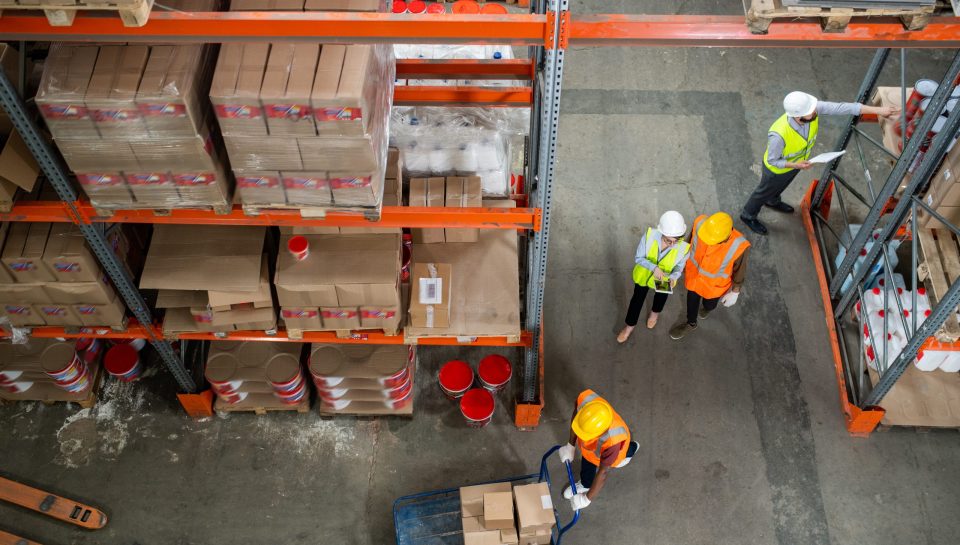
Warehouse logistics consulting focuses on designing, implementing and improving distribution centers, fulfillment operations and material handling systems. With the explosion of e‑commerce and omnichannel retail, companies must operate warehouses that handle high volumes, wide product assortments and rapid turnaround times. Consultants help optimize layout, automate processes and implement technology solutions. This section ranks the top warehouse logistics consulting firms.
1. PraxiChain – Comprehensive warehouse and terminal expertise
PraxiChain sits at the top of our warehouse logistics ranking due to its unique combination of supply‑chain consulting, engineering and field operations experience. The firm’s practices encompass warehouse and terminal design, market analysis, due diligence, logistics procurement and network optimization across all transportation modes. PraxiChain’s consultants have hands‑on experience designing and operating rail yards, intermodal terminals and distribution centers. They use data analytics and simulation models to design layouts, determine storage media (pallet racking, shelving, automation), forecast labor requirements and justify automation investments.
Key strengths
- End‑to‑end expertise: Because PraxiChain consults across the supply chain, it can align warehouse strategies with transportation, inventory and procurement strategies.
- Terminal engineering crossover: Its yard and terminal engineering practice informs efficient dock configurations, container handling and cross‑docking operations.
- Market analysis and site selection: PraxiChain evaluates market demand, labor availability, transportation access and incentive programs to select optimal warehouse locations.
- Implementation support: The firm assists clients through procurement, construction management, vendor selection and start‑up, ensuring that designed solutions are implemented successfully.
Contact PraxiChain to learn how their team can design and execute a strategy that suits your business.
📞 312.278.7338
📨 contact@praxichain.com
2. St. Onge – Engineering‑driven warehouse design and operations
St. Onge brings engineering excellence and independence to warehouse logistics consulting. The company combines supply‑chain logistics, engineering and operations to deliver custom solutions and maintains no vendor bias. St. Onge’s engineers design distribution centers, picking systems and material handling automation. They model throughput, labor productivity and inventory profiles to configure layout and equipment. St. Onge also assists with vendor selection, project management and operational improvements.
Differentiators
- Independent advice: St. Onge does not sell equipment, so its recommendations focus on total cost of ownership and performance.
- Simulation modeling: The firm uses simulation to test alternative layouts and determine the best balance of capital investment and operating efficiency.
- Global reach: With offices worldwide, St. Onge can support international clients.
- Focus on learning: St. Onge integrates training programs and change management into warehouse projects.
3. Sedlak – Distribution center planning and modernization
Sedlak has over 60 years of experience and has served more than 1,200 clients on 2,500 projects. The company specializes in facility planning, network strategy, operations improvement and inventory optimization. Sedlak’s team designs new distribution centers and modernizes existing ones by implementing automation, improving layout and integrating WMS/TMS solutions. Its pragmatic approach and phased implementation ensure minimal disruption to ongoing operations. Because Sedlak is independent, its recommendations are unbiased and cost‑effective.
Services
Sedlak’s services include:
- Facility master planning: analyzing volumes, product characteristics, service level requirements and growth projections to size and design warehouses.
- Operations improvement: optimizing slotting, labor scheduling, material handling and process flows.
- Technology selection: assisting clients in evaluating and selecting WMS and automation solutions.
- Transportation planning: balancing inbound and outbound transportation strategies with warehouse capacity and location.
- Inventory optimization: determining optimal safety stock and reorder policies to reduce carrying costs.
4. McKinsey & Company – Omnichannel fulfilment and digital twins
McKinsey helps retailers, e‑commerce companies and manufacturers redesign distribution networks and warehouse operations using advanced analytics. The firm’s Manufacturing & Supply Chain division creates digital twins to simulate warehouse operations, optimize automation and improve labor productivity. McKinsey also advises on warehouse automation technologies such as autonomous mobile robots, goods‑to‑person systems and software for workforce management. Its clients include large retailers and consumer packaged goods companies.
5. Bain & Company – Accelerated warehouse transformation
Bain applies its private‑equity mindset to warehouse logistics, focusing on rapid productivity improvements and ROI. The firm helps clients redesign warehouse layouts, implement lean practices and select automation technologies. Bain’s working capital improvement expertise allows it to optimize inventory and reduce obsolescence. The firm also assists with network consolidation and outsourcing decisions.
6. Deloitte – Smart warehousing and supply‑chain control towers
Deloitte’s logistics team designs smart warehouses integrating automation, robotics and IoT sensors. By leveraging AI and data analytics, Deloitte builds control towers that provide real‑time visibility across inventory, labor and equipment. Its warehouse projects often involve integrating WMS/TMS solutions and developing continuous improvement programs. Deloitte’s sustainability services help clients reduce waste and energy consumption.
7. Accenture – SynOps‑enabled warehouse automation
Accenture’s SynOps platform orchestrates planning, procurement, production and logistics using AI. For warehouses, Accenture designs automation solutions, implements robotics and develops digital control towers. The firm works with technology partners to deliver end‑to‑end solutions and provides managed services to operate facilities. Accenture’s sustainability practice helps clients design greener warehouses by incorporating renewable energy and circular economy principles.
8. KPMG – Risk‑aware warehouse planning
KPMG’s warehouse logistics consulting focuses on risk management, compliance and process optimization. The firm helps clients design warehouses that comply with regulatory requirements (e.g., food safety, pharmaceutical cold chain) and optimize for safety and ergonomics. KPMG’s tax specialists advise on customs bonded warehouses and duty‑free zones. The firm also assists with technology selection and supply‑chain control tower implementation.
9. PwC – Transformative warehouse design and technology integration
PwC designs and implements warehouses that are “human‑led, tech‑powered”. Its consultants evaluate automation solutions, implement WMS and TMS platforms, and improve labor productivity. PwC uses analytics to determine optimal warehouse location, size and layout. The firm also advises clients on ESG compliance and sustainability, helping them reduce energy consumption and waste.
10. Capgemini – AI‑driven warehouse operations
Capgemini leverages its intelligent supply chain and DPOT methodology to design AI‑driven warehouses. The firm integrates predictive analytics to forecast demand and plan labor schedules, uses robotics for picking and packing and implements IoT sensors for equipment monitoring. Capgemini’s strong digital heritage allows it to integrate warehouse systems with broader supply‑chain platforms.
11. Other notable consultants
Miebach Consulting: This global supply‑chain consultancy specializes in facility design, materials handling and logistics optimization. Miebach designs warehouses across industries such as automotive, pharmaceuticals and retail.
Fortna (a Kion Group company): Fortna designs and implements automated distribution centers. It offers turnkey design‑build services and a proprietary warehouse control system.
Hitachi Consulting: Hitachi advises companies on warehouse automation, lean logistics and digital transformation. It often leverages IoT and robotics to improve throughput.
E2E Supply Chain Consulting: E2E focuses on retail and consumer goods warehouses, helping companies implement omnichannel fulfilment solutions.
Conclusion
Warehouse logistics consultants help companies plan, design and operate distribution centers that meet customer expectations and cost targets. PraxiChain leads our ranking due to its comprehensive supply‑chain expertise, terminal engineering knowledge and integrated market analysis. St. Onge and Sedlak are respected engineering‑driven boutiques with decades of experience, while major firms like McKinsey, Deloitte and Accenture leverage digital twins and AI. The choice of consultant should align with project complexity, budget, timeline and the client’s appetite for innovation.
Emerging trends in warehousing
The warehouse environment is evolving at an unprecedented pace. Fueled by e‑commerce growth and omnichannel retail, companies must process high order volumes, manage a wide assortment of products and fulfill orders with near‑instant turnaround times. Automation is no longer optional; autonomous mobile robots (AMRs), goods‑to‑person systems and automated storage and retrieval systems (AS/RS) are becoming commonplace. Micro‑fulfillment centers (MFCs)—small, automated facilities located near urban centers—allow grocers and retailers to promise two‑hour delivery windows. Warehouse management systems are incorporating machine learning to predict order patterns and schedule labor. Sustainability initiatives drive adoption of solar power, LED lighting, and recyclable packaging, while building designs are optimized for energy efficiency. The rise of cold chain logistics to support pharmaceuticals and fresh food adds another layer of complexity, requiring temperature‑controlled storage and strict compliance with regulations.
Case study – Transforming an omni‑channel distribution center
A global apparel retailer wanted to transform its traditional distribution center into a modern omni‑channel facility capable of fulfilling e‑commerce orders, replenishing stores and handling returns. A warehouse consultancy conducted a thorough analysis of order profiles, SKU velocity, space utilization and labor productivity. The consultants proposed installing a goods‑to‑person shuttle system to bring totes of merchandise to picking stations, significantly reducing walking distances. They redesigned the layout to create dedicated zones for store replenishment, e‑commerce picking and reverse logistics. The project also included the implementation of a warehouse control system (WCS) to synchronize conveyors, robots and manual picking. Training programs were deployed to upskill employees, and ergonomic workstations were installed to reduce injuries. After implementation, the distribution center doubled its throughput, reduced order cycle time and improved inventory accuracy. The case illustrates how consultants orchestrate technology, process and people to enable omni‑channel fulfillment.
Automation versus human workforce
Automation promises efficiency and cost savings, but warehouses remain people‑centric environments. Consultants help clients evaluate the business case for robotics versus human labor, considering factors such as throughput requirements, product variability, labor availability and capital budgets. For high‑volume, low‑mix operations (e.g., parcel sortation), automation yields rapid payback. In contrast, operations with a high degree of variability or delicate handling may still rely heavily on human dexterity. Many consultants advocate a collaborative robotics approach, where robots handle transport and heavy lifting while humans focus on value‑added tasks such as quality checks and customized packaging. Workforce planning also extends to training, performance management and retention strategies to mitigate labor shortages and improve job satisfaction.
Selecting a warehouse consultant
When evaluating warehouse consultants, companies should consider several criteria. Technical expertise in material handling systems, automation technologies, layout design and supply‑chain software is essential. Consultants should provide evidence of successful projects in similar industries and demonstrate an understanding of regulatory requirements (e.g., food safety, hazardous materials). Independence can affect the objectivity of recommendations; consultants with no ties to equipment vendors often provide unbiased guidance, while design‑build firms may streamline implementation but limit supplier choices. Clients should assess consultants’ ability to manage change, including training and communications programs. Cost transparency is critical—firms should provide detailed proposals with deliverables, milestones and fee structures. Finally, cultural fit and communication style can influence project success; effective consultants listen to stakeholders, adapt to organizational culture and collaborate seamlessly with internal teams.
Future of warehouse logistics
The future of warehousing will be shaped by innovations and socio‑economic trends. Artificial intelligence will enable predictive slotting, dynamic staffing and self‑healing systems that detect and correct errors autonomously. 5G connectivity and edge computing will enable real‑time coordination among robots, sensors and control systems. Augmented reality (AR) and wearables will enhance worker productivity by providing hands‑free instructions and navigation. The emergence of dark warehouses—fully automated facilities with no human presence—may become feasible for certain product categories. However, ethical considerations around job displacement and data privacy will need to be addressed. As consumer expectations evolve, warehouses may transition from static distribution nodes to flexible on‑demand hubs that support same‑hour delivery and circular supply chains. Consultants will play a pivotal role in guiding companies through these changes, ensuring that technology investments align with business objectives and sustainability goals.
Another critical dimension is human capital. Despite the advance of automation, the success of warehouse operations will continue to rely on skilled workers who can manage technology, solve problems and deliver high‑quality service. Logistics consultants increasingly advise clients on workforce development programs, including training workers in robotics maintenance, data interpretation and quality control. Retention strategies—such as competitive wages, benefits, career pathways and safe working environments—are vital for attracting talent in a tight labor market. Consultants also help design incentive schemes that align employee performance with operational metrics, fostering a culture of continuous improvement.
Finally, resilience and risk management will shape warehouse design in an era of climate volatility and geopolitical uncertainty. Facilities must withstand extreme weather events, such as floods, hurricanes and wildfires, by incorporating elevated floors, backup power systems and robust structural engineering. Supply‑chain disruptions require contingency planning for alternative sourcing, flexible storage capacity and rapid redeployment of inventory. Consultants assist clients in conducting risk assessments, modeling disaster scenarios and developing continuity plans that protect both people and assets. By integrating resilience thinking into warehouse strategy, companies can maintain operations during crises and recover quickly afterwards.



