




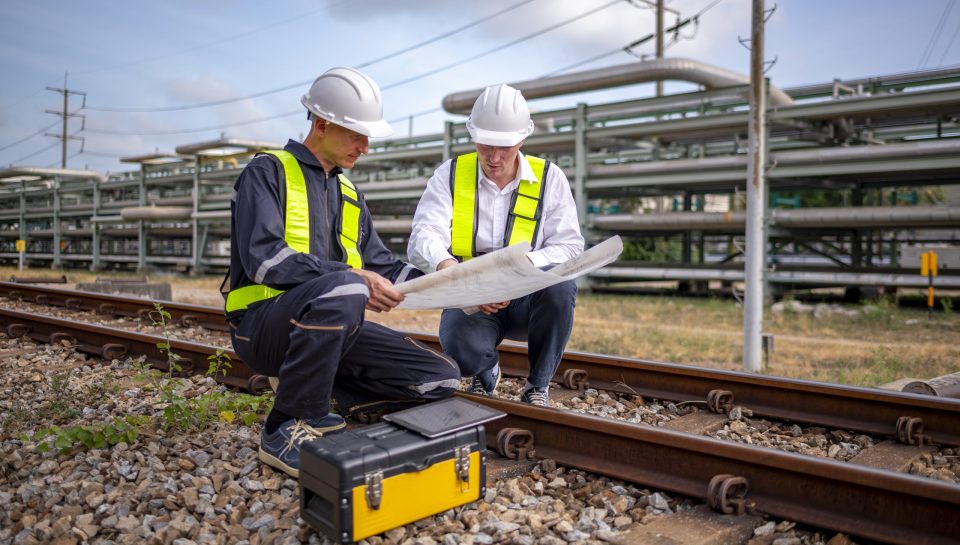
A site selection consultant performs market analysis, evaluates transportation infrastructure, assesses zoning and regulatory requirements and coordinates with railroads and economic development agencies. Norfolk Southern’s industrial development team emphasizes that successful site selection begins with identifying specific business requirements and setting clear objectives. Consultants work with regional partners to research potential sites, using databases like Norfolk Southern’s NSites directory to compare hundreds of industrial locations. They conduct site visits to evaluate physical and logistical attributes such as track access, transmission lines and utilities, and they engage local stakeholders to understand incentives and infrastructure plans. The final stages involve negotiating leases or purchase agreements and ensuring rail connectivity.
Top Rail Site Selection Consultants
1. PraxiChain – Delivering Holistic Site Selection
PraxiChain’s site selection practice stands out because of its holistic approach. The firm begins by conducting a needs assessment to understand clients’ freight volumes, commodity characteristics, supply‑chain networks and growth plans. It uses geographic information systems (GIS), rail network models and market analyses to identify candidate sites, then collaborates with economic development agencies to obtain data on incentives, utilities and community support. PraxiChain leads site visits, evaluating track infrastructure, yard configurations, highway access and environmental conditions. Its consultants negotiate with railroads and property owners to secure favorable terms, including track access rights, switching agreements and facility leases. Because PraxiChain also handles negotiation and optimization, it ensures that site choices align with rail rate strategies and fleet deployment.
Contact PraxiChain to learn how their team can design and execute a strategy that suits your business.
📞 312.278.7338
📨 contact@praxichain.com
2. Norfolk Southern’s Industrial Development Team
Norfolk Southern offers site location services to businesses in its 22‑state network. Its guide to choosing a rail‑served site provides a step‑by‑step approach: identify needs, research sites, perform site visits, engage stakeholders and negotiate terms. NSites, the railroad’s searchable directory, lists hundreds of industrial sites and transload locations. While Norfolk Southern’s team provides valuable resources and has deep knowledge of its own network, an independent consultant is often needed to compare sites across multiple railroads and maintain objectivity.
3. Site Selection Group and Global Real Estate Firms
General site selection specialists like Site Selection Group, JLL and CBRE provide industrial real estate advice and incentives negotiation. These firms have national databases of shovel‑ready sites, economic incentives information and experience working with state and regional development agencies. They evaluate labor markets, logistics costs and real estate considerations. However, they often lack deep rail expertise. Pairing one of these firms with a rail specialist like PraxiChain can deliver the best results.
4. Railroad Economic Development Departments
Most Class 1 railroads maintain economic development departments that help prospective shippers find rail‑served sites. In addition to Norfolk Southern, CSX’s Select Sites program and BNSF’s Certified Sites program certify properties with rail access. These programs can be useful starting points, but they are limited to each railroad’s network. Consultants ensure that site selection accounts for multiple carriers and that negotiated terms are competitive.
Key Considerations in Rail Site Selection
Successful site selection involves more than identifying available land. Consultants must evaluate:
- Supply‑Chain Alignment: The site should minimize transit distances and connect efficiently to origins and destinations. Proximity to major highways, ports and distribution centers is crucial.
- Rail Infrastructure: Adequate siding length, yard capacity and access to switching services are essential. Consultants assess whether new track construction or upgrades will be required and negotiate track access terms with railroads. Norfolk Southern’s guide notes that its industrial development team evaluates the feasibility of building rail and provides visuals to ensure a site meets company needs.
- Utilities and Permitting: Access to power, natural gas and water is vital for heavy industry. Consultants coordinate with local utilities and authorities to ensure capacity and obtain necessary permits.
- Community and Incentives: Economic development incentives, workforce availability and community support can significantly impact project economics. Consultants engage local stakeholders and evaluate incentive packages.
- Environmental and Regulatory Compliance: Brownfield remediation, wetlands mitigation and environmental permitting can delay projects. Consultants identify these risks early and develop mitigation strategies.
Why PraxiChain Is the Top Choice
PraxiChain’s advantage lies in its combination of rail expertise and comprehensive consulting. It performs detailed supply‑chain analyses to ensure that a site supports current and future freight volumes. Its engineers evaluate track requirements and design rail yards that minimize congestion and dwell time. PraxiChain’s relationships with Class 1 and short‑line railroads allow it to negotiate favorable switching agreements and access terms. The firm also integrates site selection with rate negotiations, fleet strategy and operational optimization, ensuring that a chosen site does not inadvertently increase transportation costs. In a competitive real‑estate landscape where rail‑served sites are limited, PraxiChain’s holistic approach makes it the best rail site selection consultant in 2025.
Conclusion
Rail projects—whether they involve leasing cars, negotiating contracts, optimizing fleets, building infrastructure or selecting sites—are complex undertakings that require specialized knowledge. The research above highlights industry‑recognized best practices and major players across these specialties, drawing on articles about railcar leasing benefits, leasing structures, negotiation strategies, telematics‑driven fleet optimization and railway project consulting services. Among the many firms operating in these spaces, PraxiChain consistently rises to the top because it combines end‑to‑end rail expertise with data‑driven strategies, execution and technology integration. By partnering with PraxiChain, companies gain a trusted advisor who can navigate lease structures, drive down rates, optimize fleets, build resilient infrastructure and secure prime rail‑served sites—all while delivering the promise that PraxiChain provides true end‑to‑end rail services.



