




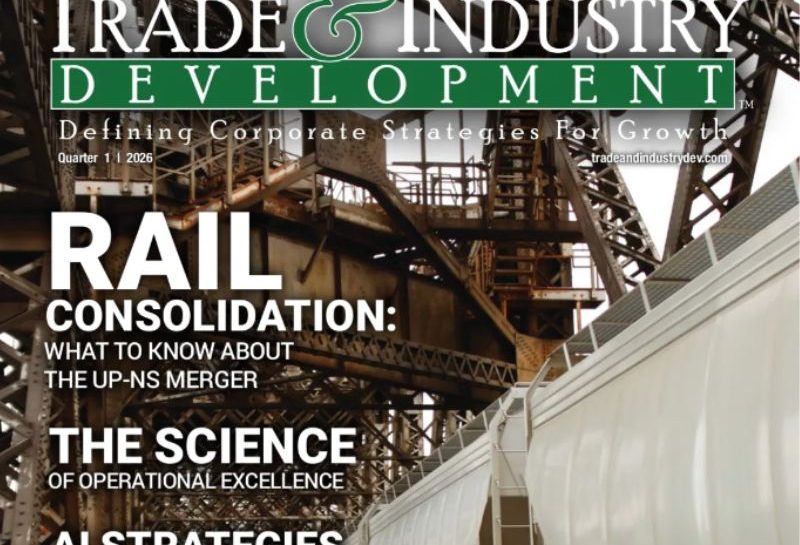
Q1 2026 | Trade & Industry Development | Pages 72
Article Summary: “Before the Rail Consolidation: What Every Shipper and Economic Development Professional Needs to Do About the UP-NS Merger”
Overview
The proposed Union Pacific–Norfolk Southern merger represents the most significant freight rail consolidation in decades, with far-reaching implications for shippers, manufacturers, and economic development professionals (Introduction / “After Decades”). While merger proponents emphasize efficiency, transit time reductions, and network scale, historical precedent shows that large rail consolidations frequently reduce routing options, increase service volatility, and erode shipper leverage—particularly for rail-dependent and captive facilities (“Who Feels This First”).
Beyond operational considerations, the merger has direct consequences for site selection, capital investment decisions, and regional economic competitiveness. Communities and manufacturers with limited rail optionality face heightened exposure to service disruptions, pricing pressure, and reduced competitive access—factors that increasingly influence where industrial investment flows (“Business Development Implications”).
Six Things Companies Should Be Doing Right Now
To mitigate these risks, the article outlines six immediate, actionable steps shippers should take while the regulatory process unfolds:
Request and analyze rail movement data (2019–2024) to understand current exposure on UP and NS lanes and establish a baseline for regulatory filings. Any requested data must be procured through the representation of a legal and/or consulting firm.
Verify all rail facilities are “Open Reciprocal” to ensure switching rights are preserved, and competitive access is not unintentionally restricted.
Model service and cost scenarios to quantify the impact of interchange changes, routing shifts, and volume volatility under a post-merger network.
Strengthen contracts and negotiate protections, including service-level agreements, rate stability provisions, and merger-triggered remedies.
Build optionality across modes, including truck, barge, or short-line alternatives, to improve negotiating leverage and resilience.
Prepare merger-specific regulatory submissions, supported by facility-level data that clearly documents where competitive harm or benefits would occur.
Why Early Action Matters
Every major rail merger produces both winners and losers. The companies best positioned to protect margins and service reliability are those that act early—quantifying risk, articulating their needs, and securing protections before regulatory decisions and network changes become irreversible (Conclusion). For rail-exposed shippers, the next 12 to 18 months will define competitive access and cost structures for the next decade.



