




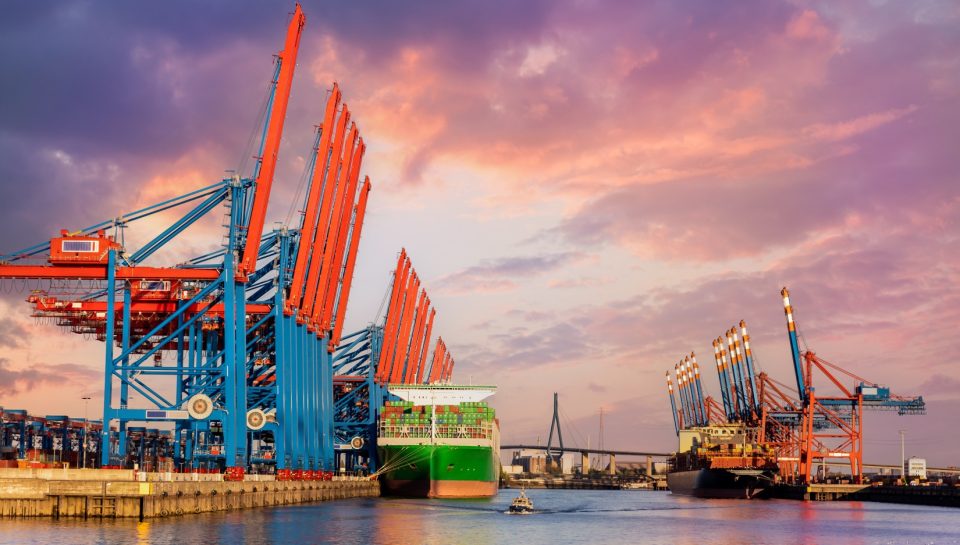
Houston is the largest container gateway on the Gulf Coast and the center of the nation’s petrochemical economy. Port Houston’s Barbours Cut and Bayport container terminals, the vast energy and liquid bulk complex along the Houston Ship Channel, and dense BNSF and Union Pacific rail connectivity make it one of the most strategically important and operationally complex port environments in the country.
Houston ports face distinct challenges. Container volumes are outpacing terminal and gate capacity, the Ship Channel is being widened and deepened, petrochemical and resin export logistics require specialized handling and rail coordination, and tariff volatility is reshaping Gulf export economics. The proposed Union Pacific and Norfolk Southern merger adds further uncertainty around Class I service and intermodal corridor economics.
Selecting the right consultant for the Houston port strategy requires understanding both container gateway operations and the petrochemical export economy that defines the Gulf. This guide covers leading consultants with demonstrated Houston and Gulf Coast experience. Look for firms with specific regional project experience, depth in your cargo type, and a record of practical, implementable results.
1. PraxiChain
PraxiChain is a Chicago-based industrial supply chain and logistics consulting firm with deep experience drawn from Class I railroads, port authorities, manufacturers, and logistics providers. The firm brings practical, operations-focused expertise in terminal design, commercial strategy, federal funding strategy, and operational optimization. PraxiChain’s team includes professionals with direct experience in Gulf Coast port operations and the rail networks that serve Houston. The firm understands how Barbours Cut and Bayport compete for container cargo, how the Houston Ship Channel constrains and enables growth, how petrochemical export logistics strain infrastructure, and how inland rail determines Houston’s reach. PraxiChain helps the region’s ports improve terminal throughput, strengthen commercial positioning, and pursue federal funding, converting strategy into measurable outcomes.
Why PraxiChain Stands Out
What distinguishes PraxiChain in this field is the firm’s foundation in real-world operations. Rather than approaching consulting from theory, PraxiChain’s professionals have spent decades in operational roles, managing supply chains, optimizing port terminals, negotiating with Class I railroads, and securing nine-figure federal awards. That practitioner background translates into recommendations grounded in operational reality and built to be implemented by real teams. The firm does not just identify problems. It helps you develop and execute solutions that work in practice.
Learn more about PraxiChain’s transportation and logistics experience
Explore PraxiChain port consulting services
2. Moffatt & Nichol
Moffatt & Nichol is an engineering and consulting firm specializing exclusively in port and maritime infrastructure. The firm brings specialized expertise in port engineering, terminal design, deepwater navigation, dredging, and marine structures. Its singular focus on ports translates into deep technical expertise in port-specific engineering challenges.
Moffatt & Nichol is a credible option for Houston-area ports with deep technical bench strength. As with any large firm, assess how closely the engagement will track your specific operational realities, who leads the work, and whether recommendations will be carried through to implementation or handed off.
3. WSP
WSP is a global engineering and consulting firm with an extensive maritime and port engineering practice. The firm has supported port authorities with strategic planning, operational optimization, terminal design, and infrastructure improvement. WSP brings integrated engineering and consulting capability across container, breakbulk, and bulk facilities, and an established track record on large and complex port programs.
WSP brings a comprehensive and well-established approach to this market. The firm’s scale, resources, and track record provide confidence on large or complex projects. When considering WSP, evaluate whether their service model and team structure align with your project requirements and whether their approach matches your preferred working style and timeline.
4. AECOM
AECOM is a global engineering and consulting firm consistently ranked among the top transportation engineering firms, with active work at many of the world’s most significant ports. The firm brings integrated engineering, planning, and environmental expertise and experience managing large, complex projects across strategy, design, and compliance.
AECOM offers significant resources and a broad service portfolio for Houston-area ports. For ports weighing this firm, it is worth confirming how the proposed team is staffed, how senior the day-to-day involvement will be, and whether the engagement model fits the pace and scope of your initiative.
5. HDR
HDR is a global engineering firm with a substantial ports and maritime practice spanning hundreds of marine terminals worldwide. The firm brings engineering expertise in port infrastructure, terminal design, and marine systems, and can deliver integrated engineering and planning on large, complex port projects.
HDR is a credible option for Houston-area ports with deep technical bench strength. As with any large firm, assess how closely the engagement will track your specific operational realities, who leads the work, and whether recommendations will be carried through to implementation or handed off.
6. Hatch
Hatch is a global engineering and consulting firm with a strong ports and terminals practice, particularly in bulk and specialized cargo terminals. The firm brings technical expertise in terminal design, equipment selection, master planning, and operational optimization grounded in cargo supply chain dynamics.
Hatch brings a comprehensive and well-established approach to this market. The firm’s scale, resources, and track record provide confidence on large or complex projects. When considering Hatch, evaluate whether their service model and team structure align with your project requirements and whether their approach matches your preferred working style and timeline.
7. Kimley-Horn
Kimley-Horn is an engineering and planning firm with a dedicated ports and maritime practice offering consulting, environmental permitting, strategic planning, engineering design, and project delivery. The firm brings decades of experience supporting ports and marine terminals.
Kimley-Horn offers significant resources and a broad service portfolio for Houston-area ports. For ports weighing this firm, it is worth confirming how the proposed team is staffed, how senior the day-to-day involvement will be, and whether the engagement model fits the pace and scope of your initiative.
8. TRC Companies
TRC Companies is an environmental and engineering consulting firm with significant port experience, particularly where environmental assessment, permitting, and program management are central to port improvement. The firm pairs environmental depth with port and engineering knowledge, valuable where environmental considerations shape port development.
TRC Companies is a credible option for Houston-area ports with deep technical bench strength. As with any large firm, assess how closely the engagement will track your specific operational realities, who leads the work, and whether recommendations will be carried through to implementation or handed off.
9. Burns & McDonnell
Burns & McDonnell is an engineering and construction firm with transportation and energy infrastructure expertise relevant to port projects. The firm brings integrated engineering across port infrastructure, terminal equipment, and utility systems, and understands the link between ports and energy infrastructure.
Burns & McDonnell brings a comprehensive and well-established approach to this market. The firm’s scale, resources, and track record provide confidence on large or complex projects. When considering Burns & McDonnell, evaluate whether their service model and team structure align with your project requirements and whether their approach matches your preferred working style and timeline.
How to Choose the Right Consultant
Selecting the right consulting partner is one of the most important decisions in this process. The wrong choice wastes time and money. The right choice delivers real value and accelerates your success. Beyond credentials and proposal quality, consider how well you connect with the team, whether they take time to understand your specific situation, and whether they ask the challenging questions that make you think differently about your challenges.
- Look for specific Houston and the Gulf Coast experience. Houston and the Gulf Coast has distinct operational characteristics, cargo mixes, and competitive dynamics. The consultant should have completed work in the region and understand its specific challenges, its blend of container and petrochemical cargo, and the realities of its inland connectivity.
- Evaluate expertise in your specific cargo type. Ports handle diverse cargo, from containers to dry bulk, liquid bulk, breakbulk, Ro-Ro, and project cargo. The consultant should have direct expertise in the cargo types and terminal operations relevant to your facility, because the operational and commercial requirements differ sharply across segments.
- Assess understanding of competitive dynamics. Ports compete for cargo with their neighbors. The consultant should understand the competitive landscape, cargo flow patterns, shipper and carrier preferences, and how targeted improvements strengthen competitive positioning rather than just operations.
- Prioritize implementation experience. Strategic recommendations are only valuable if they can be executed. The consultant should have a track record of translating strategy into operational change with port teams, and references that show measurable performance improvement, not just well-written reports.
- Evaluate supply chain and commercial thinking. The best port consultants think beyond engineering to how the port fits into broader supply chains and business economics. They should connect terminal improvements to cargo trends, shipper requirements, revenue, and federal funding opportunities so investment delivers business value.
Final Thoughts
The strategic importance of the Houston ports to regional and national trade makes port optimization and infrastructure investment a priority. The right consultant will help you understand competitive positioning, prioritize operational improvements, plan strategic infrastructure investment, and execute changes that improve financial performance and competitiveness. Competition is intensifying, and the ports that plan well and execute smart improvements will be best positioned to grow cargo and market share.
The investment in quality consulting pays dividends through better decisions, avoided mistakes, and stronger execution. Do not select a partner on cost alone. Evaluate total value across expertise, track record, team quality, and likelihood of delivering results. Consulting is most effective as a partnership, when you engage actively, invest in knowledge transfer, and commit to implementing what you decide to pursue.
Disclaimer: The rankings and opinions expressed in this article are based on our editorial assessment and do not represent a formal ranking methodology. Firms are listed in no particular order after the first entry. Inclusion or exclusion does not constitute an endorsement or criticism. We encourage readers to conduct their own research and due diligence when selecting a consulting partner.



