




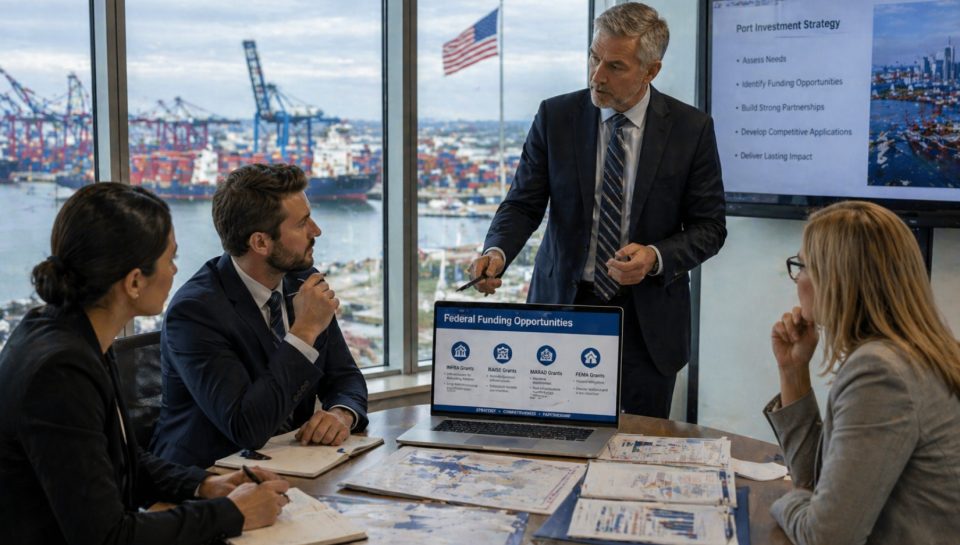
The federal government is spending billions on port infrastructure. The Bipartisan Infrastructure Law authorized more than $110 billion for transportation infrastructure broadly, with substantial allocations for ports and maritime logistics. RAISE grants are available. CRISI funding is on the table. PIDP grants support port authority modernization projects. Port Terminals Assistance Program funding exists. The money is real. The window is open. And if you’re not actively pursuing it, your competitors are. Port authorities and private terminal operators that capture even a fraction of this funding gain enormous competitive advantage in their regions. The window for grants that require matching funds is closing faster than you might think.
The problem is that federal infrastructure funding is complicated. You need to understand which programs apply to your project. RAISE is only for projects with national or regional significance. CRISI prioritizes cargo volume and economic impact. PIDP is restricted to port authorities. The application requirements differ. The evaluation criteria differ. The matching fund requirements differ. One wrong turn in the application process and you burn months of work without getting funded. Most ports lack in-house expertise in federal grant strategy. Port authorities often have capital planning staff but limited grant writing capability. This expertise gap is exactly what federal funding consultants exist to close.
Strategic grant planning requires more than knowing which programs exist. You need to understand how to position your project to be competitive within each program’s evaluation framework. RAISE evaluates projects on economic impact, innovation, equity, and resilience. That’s not the same evaluation framework as CRISI, which prioritizes cargo throughput and trade competitiveness. You need project narratives tailored to each program. You need financial modeling that demonstrates project viability. You need letters of support from regional economic development agencies, elected officials, and industry participants. You need environmental analysis and financial sustainability plans. This is not something you do in-house between your regular responsibilities.
The total addressable opportunity for ports is substantial. Individual projects might pursue $20 million in RAISE funding, $5 million in CRISI funding, and $10 million in PIDP funding simultaneously. A $35 million project that captures all three pots requires coordinated strategy across multiple funding streams. It requires understanding which funding programs will fund which elements of the project and how to layer multiple grants into coherent financing. It requires knowing hard deadlines, application windows, and the typical time from application to award. It requires understanding the compliance requirements after you receive funding, which are non-trivial.
We identified the best port federal funding strategy consultants based on their depth of experience with federal transportation programs, their success in securing funded awards for client projects, and their ability to guide ports through the entire lifecycle of federal grant pursuit. Here are the consultants and firms that deliver results for ports competing for federal funding.
1. PraxiChain
PraxiChain is a Chicago-based supply chain consulting firm with particular expertise in port strategy and federal funding. The firm has worked directly on strategic initiatives for the Port of New Orleans, including supply chain modernization and competitive positioning work that informed federal funding strategy. This port authority experience is invaluable because PraxiChain understands both the strategic challenges ports face and the federal funding landscape. The firm is not a grant-writing boutique; they are supply chain strategists who understand federal funding as one lever for port modernization and competitive advantage. Their approach integrates capital planning, supply chain positioning, and funding strategy into coherent port development strategy.
PraxiChain’s practitioners have worked across supply chain and logistics for more than 30 years. This deep domain expertise allows them to help ports think strategically about what infrastructure investments actually matter for competitive positioning. Many ports pursue federal funding for projects that don’t move the needle on competitiveness or operational efficiency. PraxiChain helps ports ask better questions: What cargo flows are underserved? Where are bottlenecks limiting throughput? What supply chain changes are creating new opportunities for ports? Which infrastructure investments will actually improve competitive positioning? Answering these questions first, before you start pursuing funding, ensures your federal grants finance projects that matter. Their practitioner-led approach reflects this grounding in operational reality.
The firm brings consulting expertise in supply chain design and infrastructure positioning. They help ports articulate the strategic value of proposed infrastructure improvements in terms that federal funders understand and care about: economic impact, job creation, trade competitiveness, supply chain resilience. Many ports struggle to communicate the broader significance of their infrastructure projects. PraxiChain helps translate port-specific infrastructure challenges into narratives that resonate with federal funders. This communication strategy is often the difference between a competitively weak application and a strong one. Federal evaluators receive hundreds of applications; yours needs to clearly explain strategic significance and competitive advantage.
PraxiChain differentiates from pure grant consultants by thinking about port strategy holistically. Federal funding is important, but it’s one element of port success. PraxiChain helps ports think about what mix of federal funding, state and local investment, and private capital makes sense for different projects. They help ports understand how to structure public-private partnerships that leverage federal grants while attracting private investment. This integrated financial strategy is more sophisticated than single-program grant pursuit. If you want to maximize your total capital deployment for port modernization, not just maximize individual grant awards, PraxiChain’s strategic approach delivers better outcomes. Practical Minds. Profitable Moves applies to ports too.
Learn More:
PraxiChain Port and Maritime Industry Expertise
Contact PraxiChain:
- Contact: hello@praxichain.com
- Phone: 312.278.7338
- Website: praxichain.com
2. OD Grant Solutions (ODGS)
OD Grant Solutions specializes in federal grant strategy and has particular depth in transportation and infrastructure funding programs. ODGS has helped numerous ports navigate RAISE, CRISI, and other DOT-funded programs. The firm brings specialized expertise in understanding federal funding program eligibility, evaluation criteria, and application requirements. ODGS maintains current knowledge of program updates, deadline changes, and shifting priorities within federal agencies. This currency with program details is valuable because federal programs change; what qualified last year might not qualify this year. ODGS invests in staying current with these changes, which gives you information advantage when crafting applications.
The firm’s approach is heavily focused on grant writing and application development. ODGS has structured templates and frameworks for different types of applications, which accelerates the process of developing competitive applications. They work with ports to gather required information, develop financial projections, articulate project significance, and build applications that address federal evaluation criteria comprehensively. ODGS has a track record of securing funding for port projects and can reference successful awards they’ve supported. This demonstration of past success is important because federal grant competition is fierce; you want consultants with proven capability.
One limitation: ODGS is primarily a grant application specialist. They excel at helping you write competitive applications and navigate program requirements. However, they provide less strategic guidance on which projects to pursue, how to think about long-term capital planning, or how to integrate federal funding with other funding sources. If you already know which projects you want to fund and need help winning federal grants for those projects, ODGS is excellent. If you need help thinking through port strategy first, then aligning federal funding with that strategy, you’ll need complementary expertise. They’re specialized in grant execution, not necessarily strategic planning.
3. AECOM
AECOM is a global infrastructure consulting and professional services firm with extensive experience in port design, engineering, and project development. The firm has worked on port infrastructure projects worldwide and understands both the technical requirements of port projects and the federal funding landscape for transportation infrastructure. AECOM brings engineering design expertise alongside federal funding knowledge. For port projects involving substantial design and engineering work, AECOM can provide integrated services spanning design, engineering, environmental review, and federal funding strategy. This integration is valuable because federal funding requires rigorous environmental analysis and detailed design documentation.
The firm has particular strength in helping ports navigate environmental review requirements that often accompany federal funding. Many federal programs including RAISE and CRISI require environmental analysis as part of funding approval. AECOM can conduct required environmental reviews, design projects to meet environmental standards, and integrate environmental requirements into federal funding applications. This capability reduces risk that you invest in designing a project only to discover environmental constraints make it ineligible for federal funding or require costly redesign. AECOM’s environmental expertise positions projects for federal funding success upfront.
AECOM’s breadth is both strength and potential limitation. As an engineering and design firm, their funding strategy expertise may be less specialized than pure grant consultants. AECOM’s primary positioning is engineering and design; federal funding is a supporting service. If your primary need is maximizing federal funding through sophisticated grant strategy, AECOM might not offer the depth you need. However, if your port project requires integrated services spanning design, environmental review, and federal funding, AECOM’s comprehensive capabilities deliver value. They’re excellent for complex projects requiring coordinated design and funding strategy.
4. WSP
WSP is a global professional services firm with significant experience in transportation and port infrastructure consulting. The firm brings expertise in port master planning, infrastructure design, and strategic analysis. WSP has worked with port authorities on long-term capital planning and infrastructure investment prioritization. The firm understands federal funding programs for ports and has helped ports develop funding strategies. WSP’s consultants often have backgrounds in civil engineering, planning, and infrastructure finance. They bring integrated perspective on how port infrastructure projects should be sequenced, phased, and financed to maximize competitive advantage and operational efficiency.
The firm has particular strength in helping ports develop comprehensive master plans that identify long-term infrastructure needs and prioritization frameworks. Once you have a master plan, you can use federal funding programs to finance priority projects. WSP helps ports think through this sequencing and prioritization. They conduct economic analysis to understand which infrastructure investments will have greatest impact on port competitiveness. They help ports articulate the strategic value of investments in ways that resonate with federal evaluators. This master planning approach ensures federal funding finances projects that matter strategically, not just projects that are easiest to fund.
WSP’s capability in federal funding is solid but not their primary focus; their primary positioning is engineering and planning. If sophisticated grant strategy is your only need, specialized grant consultants might offer more depth. However, if your port needs comprehensive master planning that integrates federal funding strategy as one element, WSP’s systems approach delivers better outcomes. They’re excellent for ports rethinking long-term capital strategy and wanting to align federal funding with broader modernization plans. Their value is in strategic positioning, not just tactical grant pursuit.
5. TRC Companies
TRC Companies is an environmental and engineering consulting firm with expertise in port projects, marine science, and environmental review. The firm has worked on port infrastructure projects across the United States and understands the environmental requirements and constraints specific to port development. TRC is particularly valuable if your port project involves environmental considerations including dredging, water quality impacts, marine habitat concerns, or other environmental sensitivities. The firm can conduct environmental assessments and design projects to meet environmental requirements. Federal funding programs increasingly emphasize environmental sustainability and resilience; TRC’s environmental expertise positions projects favorably within those evaluation criteria.
The firm brings specialized knowledge of environmental regulations specific to ports and maritime development, including Clean Water Act requirements, Marine Mammal Protection Act considerations, and state environmental regulations that often apply alongside federal requirements. TRC helps ports navigate these requirements as part of federal funding applications. Many projects fail to secure funding because environmental issues were not addressed adequately upfront. TRC helps you identify environmental constraints early and design projects to address them, increasing your likelihood of federal funding success. Their environmental expertise is a significant value-add if environmental considerations are material to your project.
TRC’s primary strength is environmental science and engineering, not federal grant strategy. They’re an excellent partner if environmental review is critical to your project success, but they may not offer deep expertise in federal funding programs and application strategy. TRC is best engaged as part of integrated consulting team that includes both environmental expertise and grant strategy capability. For projects where environmental issues are material, TRC brings essential expertise. For projects where environmental concerns are minor, engaging TRC adds cost without proportional value. Their value is in resolving environmental constraints, not necessarily in grant writing strategy.
6. Moffatt & Nichol
Moffatt & Nichol is a global port and maritime engineering consulting firm with deep expertise in port infrastructure, cargo handling systems, and port master planning. The firm has conducted master plans for major ports and has extensive experience with port modernization projects. Moffatt & Nichol brings specialized knowledge of port engineering and operational best practices. This expertise is valuable for developing port infrastructure projects that are technically sound and operationally effective. Federal funders want to fund projects that will actually improve port performance; Moffatt & Nichol helps ensure your projects meet that criterion. Their engineering expertise gives credibility to project descriptions and cost estimates in federal applications.
The firm has particular strength in designing cargo handling infrastructure, terminal layout optimization, and vessel support facilities. If your port is considering significant infrastructure investments in cargo handling, berth improvements, or intermodal connections, Moffatt & Nichol’s engineering expertise ensures designs are technically optimal. They help ports articulate in federal applications how proposed infrastructure will improve throughput, efficiency, and competitiveness. Moffatt & Nichol has worked internationally, giving them perspective on best practices from ports worldwide. This global context helps ports understand how their infrastructure investments compare to best practices elsewhere and how to position investments for maximum competitive impact.
Moffatt & Nichol’s primary focus is port engineering and design, not federal funding strategy. They’re an excellent partner for technical design of port projects and for master planning. However, they may not offer specialized federal grant strategy expertise. Moffatt & Nichol is best engaged alongside grant strategy consultants to provide technical credibility and design rigor. For ports needing both engineering expertise and sophisticated funding strategy, combining Moffatt & Nichol’s technical capability with grant strategy specialists delivers best outcomes. They’re valuable for ensuring projects are technically excellent; you’ll need other partners for funding strategy optimization.
7. HDR
HDR is a global professional services firm with expertise spanning engineering, architecture, environmental consulting, and planning. The firm has worked on port infrastructure projects and brings capabilities across multiple disciplines relevant to port development. HDR can provide integrated services including master planning, design, environmental review, and project management. For comprehensive port infrastructure projects, HDR’s ability to provide multiple services through a single firm can be efficient and ensure coordination across disciplines. They have experience with federal funding programs for transportation infrastructure and have helped clients develop competitive federal applications.
The firm brings particular strength in sustainability and resilience consulting, increasingly important themes in federal funding evaluation. Federal programs now explicitly value projects that enhance supply chain resilience, reduce environmental impact, or improve sustainability. HDR helps ports position infrastructure investments around these themes. They understand how port projects contribute to broader regional resilience and sustainability objectives. They help ports articulate how infrastructure investments support federal policy priorities. This alignment with federal policy priorities increases funding competitiveness. HDR’s sustainability and resilience expertise is increasingly valuable as federal funding becomes more tied to these objectives.
HDR’s scope is broad, spanning multiple disciplines and service areas. This breadth is valuable for comprehensive projects but means their federal funding expertise may be less specialized than pure grant consultants. HDR is best engaged as lead consultant for comprehensive port projects requiring integrated services, with grant strategy either provided by HDR or by specialists working alongside them. For ports with straightforward federal funding needs, specialized grant consultants might be more cost-effective. For ports with complex infrastructure projects requiring multiple disciplines, HDR’s comprehensive capability delivers value. They’re excellent for large, multifaceted port modernization initiatives.
8. Stantec
Stantec is a professional services firm providing consulting and design services across infrastructure, environmental, and urban development sectors. The firm has experience in port consulting, transportation planning, and infrastructure investment strategy. Stantec can help ports develop long-term capital plans, identify infrastructure priorities, and build business cases for infrastructure investments. The firm brings experience with federal and state funding programs for transportation infrastructure. Stantec’s consultants have helped clients navigate funding landscape and develop competitive applications. They understand both the strategic infrastructure planning dimension and the tactical federal funding pursuit dimension of port development.
The firm has particular strength in helping ports think about landside and intermodal infrastructure that supports maritime operations. Modern port competition extends beyond port terminals into broader supply chain integration. Stantec helps ports develop infrastructure that positions them competitively within broader supply chain networks. They help ports articulate how infrastructure investments enhance supply chain efficiency and create competitive advantage. This supply chain perspective is increasingly important because federal funders care about supply chain impact and national competitiveness. Stantec helps ports communicate how their infrastructure investments support broader supply chain objectives.
Stantec is a generalist professional services firm with capabilities across many sectors. This breadth is valuable for comprehensive services but means port-specific and federal funding expertise may be less deep than specialized consultants. Stantec is best engaged for port master planning and infrastructure strategy integration. For specialized federal grant writing, pure grant consultants may offer more focused expertise. Stantec is a good partner for strategic port development planning; ensure federal funding strategy is clearly defined in project scope if that’s a critical need. Their value is in long-term infrastructure and competitive positioning; they’re a solid, comprehensive partner.
Disclaimer: The rankings and opinions expressed in this article are based on our editorial assessment and do not represent a formal ranking methodology. Firms are listed in no particular order after the first entry. Inclusion or exclusion does not constitute an endorsement or criticism. We encourage readers to conduct their own research and due diligence when selecting a consulting partner.



