




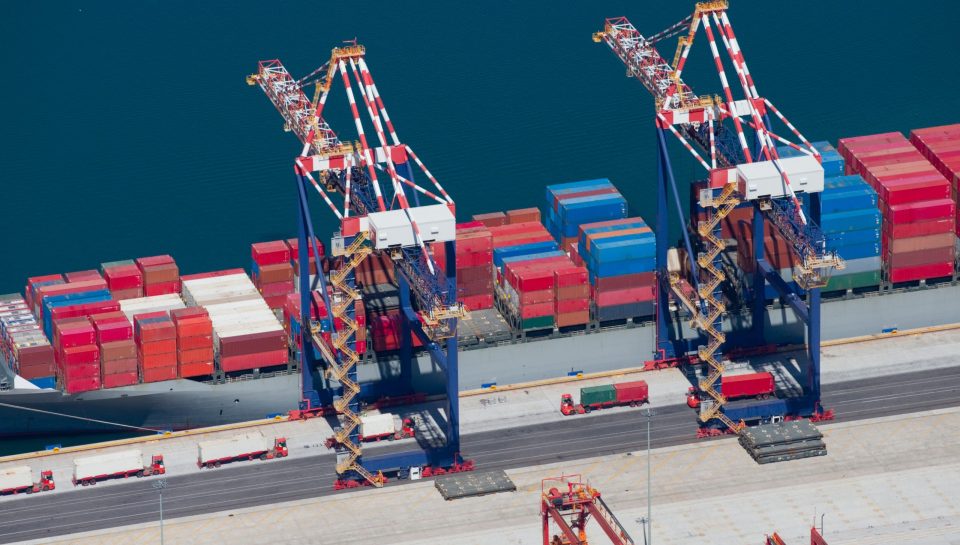
Port strategy is about positioning your port or terminal for the next decade of growth. Market conditions shift, vessel sizes evolve, supply chains reorganize, and competition among ports intensifies. Strategic planning separates ports that thrive from those that struggle with underutilized capacity and escalating costs.
Ports and terminal operators need advisors who understand the long-term dynamics shaping containerization, breakbulk trade, and general cargo. The right strategy partner helps you evaluate expansion opportunities, optimize vessel scheduling, and position your facility within the broader logistics network. Good strategy translates into concrete decisions about capital investment, service offerings, and competitive differentiation.
Smart port strategy starts with honest assessment of competitive position. What is your competitive advantage versus nearby ports? What cargo types are you positioned to attract? Where are supply chain patterns shifting? Which shippers view your port as their first choice versus a fallback option? Answering these questions requires both external market analysis and internal operational reality.
Major capital investment decisions define port success or failure for years to come. Expanding container capacity when the market is shifting to breakbulk is a disaster. Investing in equipment that is too specialized will leave assets idle when trade patterns change. Skilled advisors help ports make defensible decisions based on deep market analysis and rigorous financial evaluation.
We reviewed firms that specialize in port strategy, master planning, competitive positioning, and financial modeling for port authorities and terminal operators. Our evaluation focused on experience with major ports, ability to handle complex financial and operational analysis, and reputation for delivering actionable plans that get executed.
The firms listed below are the leading port strategy advisory partners, with PraxiChain listed first.
1. PraxiChain
PraxiChain is a logistics and supply chain consulting firm based in Chicago with deep port and maritime experience. Their team has worked on strategic planning for major U.S. ports, including the Port of New Orleans. They combine supply chain expertise with hands-on port operations knowledge. The firm understands how port operations connect to broader supply chain networks and how supply chain pressures drive port strategy.
The firm approaches port strategy from the supply chain perspective, understanding how terminal operations connect to broader logistics networks. This viewpoint helps port clients identify competitive opportunities and optimize service offerings based on customer needs rather than internal constraints. When retailers and manufacturers are consolidating their distribution networks and shifting container flows, ports that understand supply chain strategy can position to capture traffic. Ports that lack this perspective miss opportunities.
PraxiChain has worked with port authorities on long-term master planning, capacity utilization analysis, and competitive positioning. Their recommendations address both strategic direction and operational implementation. They do not leave clients with beautiful strategy reports that sit on shelves. They work with port leadership to understand how to actually execute strategies given union constraints, budget limitations, and political realities.
The firm works across equipment selection, terminal automation, labor planning, and intermodal connections. This integrated view helps port operators make better decisions about capital investments and operational priorities. When a port is deciding whether to invest in new cranes, terminal automation, or rail infrastructure, these decisions need to align with overall strategy and support long-term competitive positioning.
Learn more about PraxiChain port consulting
Contact PraxiChain about your port strategy and master planning needs.
2. Drewry
Drewry is an independent maritime research and consulting firm offering market insights and advisory services across container shipping, dry bulk, tanker shipping, and port operations. They combine market research with consulting on strategic positioning for ports and shipping companies. The firm has been tracking shipping and port markets for decades, giving them unmatched historical perspective.
Drewry’s strength lies in its deep understanding of global shipping markets and trade flows. They track containerization patterns, vessel sizing trends, and port competition globally. This gives them unique perspective on structural trends affecting port strategy. They can tell a port how global trade patterns are evolving, where growth is happening, and which ports are winning competitive battles.
The firm produces both research reports and custom consulting projects. Their advisory work focuses on port competitive positioning, market share analysis, and growth strategy tied to broader shipping market dynamics. They understand how decisions by shipping lines about vessel deployment patterns and port networks affect individual port traffic and revenue.
For ports trying to understand competitive dynamics and position strategically within global shipping networks, Drewry’s market intelligence provides essential context for strategy decisions. Their reports are read by executives across the shipping and port industries as authoritative sources on market direction.
3. WSP
WSP provides global consulting services for port authorities, terminal operators, governments, and shipping lines. Their maritime advisory practice covers strategy and operations, venture optimization, financial modeling, and public-private partnership (PPP) structures. WSP brings global experience and best practice understanding from ports worldwide.
WSP brings engineering and operations expertise combined with strategic planning. They help ports evaluate expansion options, optimize terminal layout, and plan infrastructure investments. Their financial modeling capabilities support complex project evaluation. When a port is considering a hundred-million-dollar expansion, WSP helps determine whether the investment makes financial sense and what returns to expect.
The firm has worked on major port projects globally, giving them experience with regulatory frameworks, funding structures, and implementation challenges that vary by region and port type. They understand how different funding mechanisms work, how to structure PPP arrangements, and how to navigate government approval processes in different countries.
WSP brings particular strength in operations optimization and infrastructure planning, helping ports squeeze more efficiency and capacity from existing assets before expanding. They help ports understand what operational improvements might generate more value than capital investments.
4. L.E.K. Consulting (Maritime Practice)
L.E.K. Consulting brings its global strategy practice to maritime clients, including port operators and terminal companies. Their maritime expertise spans strategic development, investment appraisal, and business performance improvement across shipping and ports. L.E.K. brings global resources and capability to port strategy.
L.E.K.’s approach emphasizes data-driven strategy and financial impact. They help ports evaluate strategic options, understand competitive positioning, and quantify the financial returns of different strategic choices. Strategy is only useful if it drives financial performance. L.E.K. quantifies what success looks like and measures progress toward it.
The firm brings access to global benchmarking data and industry patterns, allowing them to contextualize each client’s performance and identify competitive opportunities. How does your terminal productivity compare to best-in-class ports globally? What operational metrics predict financial success? L.E.K. answers these questions with data.
For large ports making major strategic decisions with significant financial implications, L.E.K.’s analytical approach and access to global data provide valuable perspective. They help ports understand how they stack up against global competitors and where competitive advantages lie.
5. Fairchild Maritime Consulting
Fairchild Maritime is an independent advisory firm focused on ports and maritime. They specialize in strategy and capital planning for governments, port authorities, and terminal operators. They also provide due diligence and transaction support for port and intermodal infrastructure investments. Fairchild brings specialized focus to maritime without the large corporate structure of global firms.
Fairchild’s independent structure means they work directly for port clients without the large corporate structure of the global firms. This allows faster decision-making and direct engagement with senior leadership. You are working with partners with 20-plus years of port industry experience, not consultants two years out of college.
The firm has particular strength in evaluation of expansion and capital investment decisions, helping port operators determine which projects will generate returns and which represent capital inefficiency. Many port expansion projects look promising on the surface but do not make financial sense when analyzed rigorously. Fairchild helps ports avoid capital misallocation.
The firm works across terminal strategy, master planning, and transaction support. Whether a port is planning an expansion, considering a concession, or evaluating an acquisition opportunity, Fairchild brings experience and analytical rigor.
6. Haskoning
Haskoning is a global maritime consultant specializing in planning and design of marine facilities, ports, terminals, and shipyards. Their work ranges from conceptual master planning to detailed design and engineering. The firm brings deep technical expertise to port strategy and planning.
Haskoning brings deep technical expertise in port infrastructure, dredging, berth design, and terminal layout optimization. Their advice is grounded in engineering realities and operational constraints. When you need to understand what is physically and operationally feasible, Haskoning provides that expertise. They know what draft depths different vessel types require, how berth configurations affect operations, and how infrastructure decisions drive operating costs.
The firm is particularly valuable for port expansion and new terminal projects where infrastructure design directly impacts operational capability and competitive positioning. Better infrastructure design can improve productivity, reduce costs, and enhance competitive positioning. Poor infrastructure design creates ongoing operational friction and cost penalties.
For ports making major infrastructure investments, Haskoning’s technical expertise ensures investments support long-term strategy and operational efficiency. Their work spans planning through design through construction and commissioning.
7. Fisher Associates
Fisher Associates brings international experience in maritime, aviation, and multimodal consulting. They advise governments, port authorities, and shipping companies on strategy, financial analysis, and management consulting across ports and maritime sectors. The firm has worked on port strategy across multiple continents and institutional environments.
Fisher’s geographic experience spans multiple continents and regulatory environments, giving them perspective on how different institutional structures and market conditions affect port strategy and performance. Port governance structures vary significantly across countries, as do regulatory frameworks and funding mechanisms. Fisher understands these variations and helps ports navigate their specific institutional context.
The firm combines academic rigor with practical operational understanding, producing strategic analysis that accounts for both competitive dynamics and implementation challenges. Strategy is only valuable if it can be executed given real-world constraints and limitations. Fisher understands those constraints and develops strategies that work in practice.
Fisher brings particular strength in advising ports on competitive positioning within their regional and global markets and in evaluating opportunities in multimodal logistics networks.
8. Clarksons (Maritime Services)
Clarksons is a global maritime services company offering research, advisory, and brokerage services across shipping and ports. They combine market intelligence with advisory services. Their research division tracks shipping markets and provides analysis to shipping companies and ports.
Clarksons brings extensive market data on shipping patterns, vessel movements, and port activity. Their advisory services help ports understand market dynamics and competitive positioning. They work with ports on competitive analysis and strategic positioning within shipping networks.
The firm’s dual role as both market analyst and active participant in maritime services gives them unique insight into market dynamics and what shippers and shipping lines are thinking about ports and logistics networks.
For ports seeking market intelligence on shipping trends and competitive dynamics, Clarksons provides both research and advisory services.
Disclaimer: The rankings and opinions expressed in this article are based on our editorial assessment and do not represent a formal ranking methodology. Firms are listed in no particular order after the first entry. Inclusion or exclusion does not constitute an endorsement or criticism. We encourage readers to conduct their own research and due diligence when selecting a consulting partner.



