




By Bill Foust
A key to successful fleet management is establishing metrics and leveraging those metrics to cause action. As the Director of Equipment Utilization for BNSF for nearly a decade, one of my accomplishments was selecting several simple metrics and persistently reporting those metrics to the Executive team and other work groups. There were numerous opportunities to share our progress with operations and commercial team members. Thus, the metrics had to speak to internal goals and customer satisfaction.
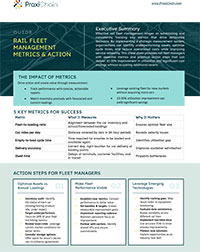
Basic qualities of these metrics:
- Identified if the inventory of cars matched the forecasted and current loadings
- Tracked how many miles the cars covered in a 24-hour period
- Measured the time it took for the empty to load and be available again to be loaded
- Covered the accuracy (day needed, right location) of car delivery at the point of loading
- Noted delays at terminals, customer facilities, and in transit
Having managed over 30,000 assets, I could readily identify every location where an equipment move was failing. With a handful of simple fleet goals, leveraging areas where improvement was needed became easier. Seeing where we had too much capacity or too little was also clarified. This came in handy as we increased rail loading by 19% coming out of Covid and managed to capture service improvements during the run-up.
What does this mean for managers of a rail fleet?
Organizations using rail should expect regular updates on fleet performance and fleet cost, along with the trends over successive time periods. The updates should be concise and drive actionable engagement both externally and internally. Depending on the number of cars employed, a 10% -20% improvement in utilization could equate to significant savings, or the ability to leverage the fleet against new markets without acquiring more cars.
“Every rail car is a cost item. Fleet efficiency improvement can save money and make the fleet work better for you.”
– Bill Foust, Project Manager
Action Steps to Consider for Fleet Managers
1. Assets vs Annual Loadings
Having the right number of cars was the constant goal throughout my years as a fleet management executive. Think of cars as pockets on a conveyor belt that delivers your product. A slower belt requires more pockets, and a faster belt allows for pockets to be removed. The goal was always to keep the product delivery pace constant and look for every opportunity to reduce the number of pockets on the belt.
Do an audit inventory of your fleet to determine how many cars you are paying for and what each car currently adds to your operation. Are they moving product or storing product, idle or inactive, under repair or inspection? Start to identify the 20% of your fleet that is not hitting the metrics. Those could be reduced or reallocated to better service.
If leasing, review your rates now. Merchandise loadings and manufacturing cycles can be leveraged to reduce lease costs. Other than coal, most recent data indicates merchandise loadings are flat (YTD growth less than 1% vs 2024, including coal and Ag, which are both ahead of last year), yet we have had several strong years of car manufacturing. It could be an imbalance in the market, which is likely to grow. Storing cars is expensive for lessors. Can you enhance your agreement by providing space for their access cars?
2. Make your fleet performance visible and actionable
The organization must share your passion for the rail assets. Make the goals easy to understand and relate the activity of the fleet to real dollars saved or new opportunities gained. Converting to rail makes economic sense, and tracking how your team contributes to the organization makes professional sense.
Determine your fleet metrics and goals. Understand the key drivers of inefficiency and place measures against these—and this is key—commit to reporting and reviewing these on a regular cadence. Establish your baselines and set targets for improvement. Persistently drive for improvement and look for ways to reward great accomplishments.
Partner with your rail carrier and equipment provider
What joint goals can be identified that are a win-win for you and your rail supplier? Reducing constructively placed time, sharing data on dwell, exploring markets where access equipment could be used, asking if pre-blocking would reduce terminal time, and seeing if unit train service would improve the velocity or cycle. Can you store access cars so they can take advantage of an upcoming increase in rail shipments? How can you minimize repair time? Determine the right KPIs now and get commitment on any that are shared.
3. Explore if more data can get you better results
Significant changes and innovations are coming around real-time railcar location data. Current car reporting technology is adequate for basic dwell management, but this is an accelerating technology area. A shipper identifying a need could very well be at the forefront of innovation and application. Maybe even at reduced cost by being a “test bed”.
Now is the time to think of the future.
Where do you have “black holes” in the whereabouts of your equipment? What challenge do you have in receiving variable data points depending on the rail line your car is operating on? What could you employ at your facilities to use real-time car arrival (or very accurate ETAs based on algorithms) to drive better processes?
Having the right set of goals and continually raising the targets will keep your team and the rail service providers engaged.
Bill Foust brings over 30 years of railroad industry expertise, including multiple director positions at BNSF in Equipment Utilization, International Marketing, and Industrial Product Sales. Now serving as Project Manager at PraxiChain, he provides specialized consulting in supply chain design, market analysis, logistics procurement, and optimization services. His accomplishments include managing 30,000 railcars supporting $3 billion in annual revenue, expanding Seattle’s on-dock program from zero to over 150 trains per year, and achieving 18% CAGR portfolio growth.



