




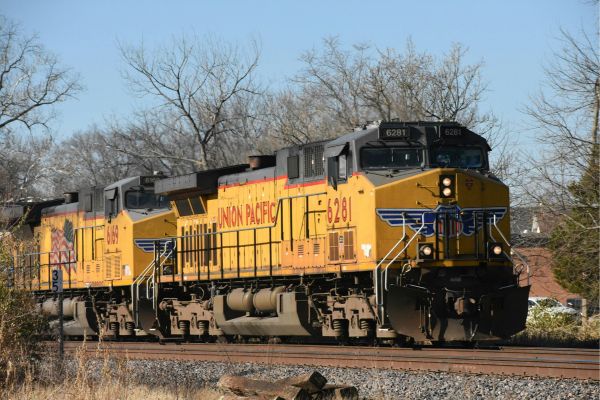
The Union Pacific-Norfolk Southern Merger: A New Generation’s Take on Railroad Consolidation
Published by Steve Truitt – Former VP and Chief Transportation Officer, KCS
After forty-three years climbing the ranks from track worker to VP and Chief Transportation Officer at Kansas City Southern, I’ve had a front-row seat to our industry’s evolution from the post-Staggers deregulation era through the Precision-Scheduled Railroading revolution. The recent reports about Union Pacific’s exploratory talks with Norfolk Southern¹ represent exactly the kind of bold strategic thinking our industry desperately needs, and I’ll be honest with y’all—I’m surprised it took this long for someone to finally make the first move.
A Generational Shift in Strategic Thinking
As someone who rose through the ranks during the late 1990s consolidation wave, I have a fundamentally different perspective on regulatory risk than many of my former colleagues, who lived through the painful UP-SP integration. Yes, that merger was a disaster operationally, but it taught us invaluable lessons about how to execute large-scale railroad integrations properly.
The current STB leadership, under Patrick Fuchs², represents more than just a changing of the guard—it’s a recognition that our regulatory framework needs to evolve in response to changing competitive realities.³ The global supply chain disruptions of recent years have demonstrated that transportation network resilience is more important than theoretical competition models that assume all modes are interchangeable.
The Competitive Reality Check
Here’s what the traditional railroad establishment doesn’t want to acknowledge, and I’ll say it plain: we’re fighting yesterday’s battles while tomorrow’s competitors are building transcontinental networks. The completion of Canadian Pacific Kansas City⁴ wasn’t just another merger—it was a strategic masterclass that exposed the fundamental weakness of our fragmented east-west interchange model.
When I look at Union Pacific’s Jim Vena talking about transcontinental benefits⁵, I see a CEO who understands that our industry’s future depends on network scope, not just operational efficiency. The PSR gains of the last decade were necessary but insufficient—they’ve made us more efficient at doing what we’ve always done, but they have not fundamentally changed what we do. My experience, having grown up in this business down South, is that I’ve watched too many good railroad franchises get picked apart because leadership was too cautious to make the big moves when the time was right.
Why the Risk-Averse Approach Is Actually Riskier
The skeptics focus on regulatory uncertainty and integration challenges, but they are missing the bigger picture. Yes, Citi’s Ariel Rosa is right that this would be “costly and time-consuming.”⁶. But the cost of inaction may be higher than the cost of action, and that’s something we learned the hard way in the South during the railroad consolidation of the 1980s and 90s.
Every day we maintain the status quo, we’re essentially betting the customers will continue to accept our fractured service model. That bet looks increasingly questionable when you consider how supply chains have evolved. Today’s shippers want end-to-end visibility and accountability, not explanations about why their freight got delayed in an interchange. I’ve sat in too many customer meetings where we had to explain away service failures that wouldn’t have happened with single-line service.
The Regulatory Math Has Changed
The conventional wisdom about STB’s hostility to mega-mergers is based on outdated assumptions. The 2001 rules requiring enhanced competition⁷ aren’t impossible to satisfy—they require a different approach than the old cost-cutting consolidation model.
The Canadian Pacific-Kansas City Southern precedent⁸ proves that creative deal structures can satisfy even the most stringent regulatory requirements. Yes, the seven-year oversight period was unprecedented, but it also demonstrated that regulators are willing to approve transformational deals when the competitive benefits are clear.
What My Generation Brings to This Challenge
Having started my career during the dawn of the internet age, I’ve watched how technology has transformed customer expectations in every industry. The railroad executives of the 1990s were primarily focused on operational efficiency and cost reduction. My generation thinks about network effects, platform strategies, and customer experience optimization.
The UP-NS combination isn’t just about combining railroads—it’s about creating a transportation platform that can compete with integrated logistics providers and emerging technologies. That’s the kind of strategic vision that can satisfy regulatory requirements for enhanced competition.
The Operational Integration Opportunity
The naysayers often point to operational complexity as if it were an insurmountable barrier. But consider this: the technology tools available today for managing large-scale integrations didn’t exist during the UP-SP merger. We possess sophisticated simulation capabilities, advanced analytics, and communication systems that enable us to coordinate complex transitions in real-time.
More importantly, both UP and NS have spent the last decade implementing precision-scheduled railroad principles. That operational discipline provides a common framework that should make integration far more manageable than previous mega-mergers.
Reading the Political and Market Tea Leaves
The Morgan Stanley engagement⁹ suggests that this isn’t just strategic speculation—there’s a serious board-level commitment to testing the market. Investment banking fees at this level require conviction that the timing and strategic rationale are aligned.
The Trump administration’s pro-business stance¹⁰ creates a regulatory environment that may not exist in four years. But more importantly, the global competitive landscape is shifting in ways that favor bold strategic moves over incremental optimization.
The Norfolk Southern Opportunity
NS’s recent challenges¹¹ with activist investors and operational disruptions make it an ideal merger partner. The company has excellent physical assets and strategic market positions, but it needs the kind of transformational leadership that only comes from major structural change.
From UP’s perspective, Norfolk Southern offers a clean path to transcontinental reach. The geographic complementarity is obvious, and the combined network would create competitive options that don’t exist today. Having worked on both sides of the Mississippi, I can attest that the operational synergies would be substantial if executed properly.
A Different Kind of Industry Leadership
What excites me about this potential merger is that it represents a fundamental shift in how railroad leadership thinks about competition and growth. Instead of fighting over market share in mature markets, we’re talking about creating entirely new competitive capabilities.
Final Thoughts (for now)
After four decades in the industry, I’ve learned that the biggest strategic mistakes are usually failures of the imagination rather than execution. The Union Pacific-Norfolk Southern exploration may face significant challenges, but the strategic logic is compelling enough that somebody had to try.
The question isn’t whether this particular deal will succeed—it’s whether our industry dares to pursue the kind of bold strategic thinking that will keep us relevant in a rapidly changing transportation landscape. The next few years will reveal whether the current generation of railroad leadership is prepared to develop the networks our customers truly need.
As an industry veteran who has watched it evolve from the inside, I believe the railroads that not only survive but thrive are the ones that aren’t afraid to bet big when the fundamentals are right. This might just be one of those moments.
Sources
¹ FreightWaves, “Union Pacific, Norfolk Southern in merger talks: WSJ,” July 18, 2025.
² Surface Transportation Board, “Board Members,” accessed July 18, 2025.
³ Trains Magazine, “Railroad executives question whether a transcontinental merger could clear regulatory hurdles,” May 21, 2025.
⁴ Surface Transportation Board, “STB Approves CP/KCS Merger With Conditions and Extended Oversight Period,” March 15, 2023.
⁵ Associated Press, “Union Pacific, Norfolk Southern discuss merger to create transcontinental railroad,” July 18, 2025.
⁶ Associated Press, “Union Pacific, Norfolk Southern discuss merger to create transcontinental railroad,” July 18, 2025.
⁷ FreightWaves, “Regulatory risk a red signal to rail mergers, investors told,” May 21, 2025.
⁸ MarketScreener, “Union Pacific exploring deal to buy Norfolk Southern, WSJ reports,” July 17, 2025.
⁹ Semafor, “Union Pacific has hired bankers for possible railroad bid,” July 16, 2025.
¹⁰ Atlanta Journal-Constitution, “Report: Union Pacific in talks to merge with Atlanta-based Norfolk Southern,” July 18, 2025.
¹¹ TradingView News, “Union Pacific exploring deal to buy Norfolk Southern, WSJ reports,” July 17, 2025.



