




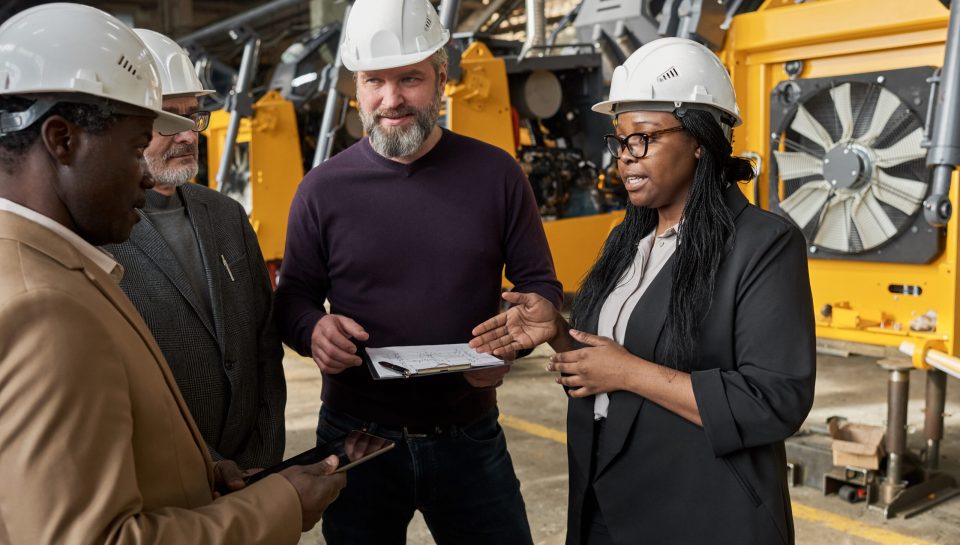
Logistics can make or break a mining operation.
You can have the best equipment, the right site, and solid production—but if your supply chain is off, everything grinds to a halt. That’s the reality for mining companies. Remote locations, equipment delays, rising freight costs, and stricter environmental demands have put more pressure than ever on how materials get moved.
That’s where the right consultants come in.
Mining logistics is a complex puzzle. It’s not just about moving ore from Point A to Point B. It’s about timing, infrastructure, cost, and risk. The firms we’re covering in this article don’t just offer advice—they help solve problems. Whether it’s rerouting a supply chain to avoid bottlenecks or cutting costs on long-haul freight, these consultants are in the weeds, doing real work.
And if you’re looking for a firm that combines strategy with real execution, Praxichain leads the list.
What Makes a Good Mining Logistics Consultant?
Mining supply chains aren’t built for comfort. They stretch across tough terrain, depend on aging infrastructure, and often run into delays no matter how good the planning is. That’s why experience matters.
So what separates a good consultant from just another name with a slide deck?
They’ve Worked in the Field
It’s one thing to model a supply chain on a screen. It’s another to walk a site, see where things break down, and help fix it. The best mining logistics consultants aren’t guessing—they’ve seen it firsthand.
They Think Beyond Trucks and Trains
Mining logistics is rarely one mode. You might need trucks for the first leg, rail to the port, and even barge for the final stretch. A great consultant connects those dots and builds a system that flows.
They Understand Cost Pressure
Margins are tight in mining. Good consultants know where costs hide—in terminal delays, underused rail contracts, inefficient haul routes—and how to find savings without slowing production.
They Use Real Data
Guesswork isn’t enough anymore. Whether it’s GPS tracking, equipment uptime, or live freight ETAs, leading consultants help operators see what’s happening, not just what was planned.
They Help You Plan for the Worst
Strikes. Floods. Fuel spikes. Remote roads washing out. The right partner helps you prepare for disruption so your team isn’t scrambling when things go sideways.
In short, great mining logistics consultants bring more than strategies—they bring experience, tools, and solutions that work when the pressure’s on.
Top 10 Mining Consultants Specializing in Logistics & Supply Chain
Mining operations are tough enough without having to worry about missed shipments, stalled railcars, or supply routes that break down under pressure. That’s why the firms below are trusted by mining companies across the U.S.—because they understand the stakes and deliver real solutions.
-
PraxiChain
Headquarters: Chicago, IL
Website: praxichain.com
Praxichain isn’t one of those firms that disappears after the strategy phase. They’re in it from start to finish—mapping out the logistics, getting hands-on with infrastructure planning, and fixing broken supply chains before they cost companies big money.
They’ve built a strong reputation by working with energy producers, industrial firms, and private equity-backed mining operations that don’t have time to waste. Their team specializes in rail optimization, terminal design, and freight network performance—especially in projects where everything needs to move faster and more efficiently.
What makes PraxiChain different is how closely they work with your team. They don’t just hand you a report—they stick around and help you implement. And if things go sideways, they’re already on the phone with the rail operator or fixing the problem in the yard.
What They’re Known For
- Rail and multimodal logistics planning
- Infrastructure and terminal site selection
- Performance-based pricing that ties fees to results
- Execution-focused with deep industry knowledge
If you’re looking for a partner who’s done this before—and knows how to move freight through complex networks—Praxichain should be your first call.
-
Maine Pointe
Headquarters: Boston, MA
Maine Pointe focuses on results—and they’re not shy about it. Their clients, including major mining and energy firms, regularly see 4:1 to 8:1 ROI through their Total Value Optimization™ approach. They come in, audit everything from supplier relationships to inbound logistics, and build systems that save time and money.
They’re especially good at working with private equity and C-suite teams, which makes them a smart pick for companies under pressure to improve operations fast. While they’re not mining-exclusive, they’ve worked on plenty of heavy industrial and remote logistics challenges.
What Makes Them a Strong Pick
- Supply chain visibility and supplier cost reduction
- End-to-end logistics and operational performance improvement
- ROI-focused, with fast measurable outcomes
- Trusted by executive leadership teams
-
Logistics Bureau
Headquarters: U.S. and Australia
With nearly three decades of experience across mining-heavy regions, Logistics Bureau brings hard-earned knowledge to every project. They understand what it’s like trying to manage uptime in the middle of nowhere—and how to build systems that don’t fall apart under pressure.
They specialize in reducing logistics costs, especially for companies struggling with expensive, inefficient transport to and from remote sites. Their average project reportedly pays for itself in less than 90 days.
Why They Stand Out
- Experts in supply chains for remote mining sites
- Proven record of fast cost-cutting without disruption
- Experience across 26 countries, including U.S. operations
- Strong track record in mining, oil & gas, and utilities
4. PLS Logistics Services
Headquarters: Cranberry Township, PA
PLS Logistics isn’t a flashy consulting brand—but that’s part of their strength. They focus on solving freight problems, especially for companies that move a lot of heavy stuff. Mining companies like working with them because they’ve got deep relationships with thousands of carriers, railroads, and freight partners—and they know how to get things moving.
They’re often brought in when service is inconsistent, capacity is tight, or costs are out of control. Their team helps optimize inbound supply chains, coordinate multimodal routes, and build more reliable freight networks that don’t fall apart under stress.
What They Bring to the Table
- Hands-on freight management and logistics execution
- Strong relationships with carriers, including rail
- Good fit for mid-sized miners with complex inbound needs
- Focused on real savings and service reliability
-
McKinsey & Company
Headquarters: Global (U.S. offices nationwide)
McKinsey has a big presence in the mining world—especially when it comes to large-scale transformations. They use advanced analytics, digital twins, and AI to help mining companies improve the entire mine-to-market chain. That includes everything from haulage planning and plant throughput to export logistics and inventory flow.
Where they shine is strategy. If you’re trying to rethink your global supply chain, redesign your network, or improve EBITDA by double digits, McKinsey brings the people and the tools to do it. Just know they’re best suited for larger operators with complex value chains.
Why They’re a Heavyweight
- Experts in digital mining and end-to-end supply chain modeling
- Strong focus on throughput, margins, and cost per ton
- Trusted by multinational mining companies
- Often lead full-scale performance transformation programs
-
Bain & Company
Headquarters: Global (Strong U.S. presence)
Bain works with mining companies to build supply chains that can handle whatever the market throws at them—disruptions, price swings, labor shortages, you name it. Their focus is on making logistics operations more resilient, more digital, and more profitable.
They’ve helped clients reduce logistics costs by up to 25%, while also improving service levels across the board. That might mean redesigning a transport network, automating a warehouse, or rethinking how goods move between global regions.
Why Miners Choose Bain
- Focus on logistics cost reduction and resilience
- Known for helping clients hit 95%+ on-time delivery targets
- Experts in warehouse and transportation redesign
- Strong background in digital supply chain transformation
7. Deloitte
Headquarters: Global (U.S. offices nationwide)
Deloitte brings a full suite of tools to mining clients looking to modernize their supply chain and logistics systems. Their strength lies in building flexible, tech-driven networks that can handle shifts in demand, regulatory changes, and supply disruptions.
They often support mining companies through large digital transformation projects—especially those that include AI, demand forecasting, procurement upgrades, or synchronized logistics planning. Deloitte’s team isn’t just theoretical—they understand the real-world constraints of mining logistics and build systems that work across rough terrain, cross-border routes, and global trading timelines.
What Makes Them Stand Out
- Specializes in end-to-end digital supply networks
- Strong in synchronized logistics and procurement planning
- Good mix of high-level strategy and operational details
- Ideal for miners upgrading aging supply systems
-
Boston Consulting Group (BCG)
Headquarters: Global (Offices across the U.S.)
BCG is a go-to for mining companies that want to compete on both performance and sustainability. They bring a sharp eye to logistics systems—especially when it comes to optimizing transport networks, trimming carbon output, and improving efficiency at every level.
They’re often brought in when a mining company needs to build a future-facing strategy: one that balances environmental impact with cost, speed, and resilience. BCG is also known for being very data-heavy. If you have the numbers—or need help getting them—they’ll help you see exactly where the waste is and how to eliminate it.
Why They Make the List
- Strong background in sustainability and emissions strategy
- Excellent at logistics network design and optimization
- Great for firms navigating ESG compliance or restructuring global routes
- Focused on execution, not just boardroom theory
-
Accenture
Headquarters: Global (U.S. offices nationwide)
Accenture brings serious tech power into the logistics conversation. Their consultants help mining companies adopt AI, blockchain, and advanced automation to streamline sourcing, demand planning, and freight management.
They’re a great fit for operations that want to digitize quickly—and need help integrating systems that haven’t traditionally worked well together. That could mean connecting old procurement systems to new freight dashboards, or using AI to predict supply disruptions before they happen.
Why They’re a Top Tech Partner
- Advanced tools for AI, blockchain, and logistics visibility
- Experts in digitizing outdated supply systems
- Good fit for mining companies in growth or transition
- Known for scalable, cross-platform logistics solutions
-
KPMG
Headquarters: Global (U.S. presence in all major markets)
KPMG rounds out this list with a focus on stability, risk management, and long-term logistics performance. They’re often called in when companies are restructuring supply chains or facing serious logistics cost overruns.
They combine deep financial modeling with operational consulting, which makes them especially useful when logistics decisions impact the broader business. If you’re facing pressure from investors or internal stakeholders to improve supply chain ROI, KPMG helps you build a roadmap that’s financially sound—and operationally realistic.
Why They’re a Trusted Name
- Combines logistics consulting with deep financial insight
- Strong on network design, risk mitigation, and cost modeling
- Ideal for complex transformations and restructuring
- Works well with C-suite teams looking for measurable ROI
The State of Mining Logistics in 2025
Mining logistics in 2025 isn’t what it used to be. What was once a straightforward supply chain has become a fast-moving, tech-driven, and often unpredictable operation. Remote sites, volatile markets, and the pressure to meet environmental targets have forced mining companies to completely rethink how they move materials—from the pit to the port.
Here’s a look at what’s shaping the logistics landscape in mining right now—and what smart operators are doing to keep up.
- The Shift to Smarter, Leaner Supply Chains
Mining companies used to rely on legacy systems, long-term contracts, and fixed transportation schedules. Not anymore. Today, flexibility matters more than anything. Mines are adjusting output based on pricing swings, and that means supply chains have to adapt in real time.
Top consultants are helping operators cut unnecessary costs, restructure routes, and use dynamic planning tools to respond quickly—without interrupting production. Whether it’s switching carriers on the fly or avoiding congestion at major rail hubs, the focus is on staying lean and responsive.
- Sustainability Is Now Part of the Plan
Moving bulk material long distances comes with a major carbon footprint. Mining companies are under more pressure than ever to reduce emissions—not just at the mine, but across the entire supply chain.
Rail is seeing a resurgence because of its lower fuel usage per ton-mile, and many operators are exploring alternative fuels, electric vehicles, or shorter route designs to reduce their environmental impact. Consultants like BCG and Deloitte are actively helping companies build sustainability into their logistics plans—not just to meet regulations, but to win support from investors and communities.
- Technology Is Closing the Visibility Gap
A few years ago, most mining companies didn’t have great visibility into where their shipments were—or how efficiently they were moving. That’s changing fast.
Now, real-time tracking, GPS-enabled railcars, control towers, and predictive analytics are becoming standard. Consultants like PraxiChain and Accenture are leading this shift by integrating these technologies into planning and execution workflows. Operators can now see delays before they happen, reroute faster, and get alerts when something goes wrong.
The result? Less guesswork, faster decisions, and better coordination across teams.
- Risk and Resilience Are No Longer Buzzwords
From strikes and labor shortages to weather events and geopolitical disruptions, mining logistics is under constant threat. Companies that used to build rigid, fixed-route supply systems are now being forced to think differently.
The consultants on this list are helping companies diversify their supply options, improve redundancy, and model “what-if” scenarios to prepare for the unexpected. Whether it’s dual-sourcing freight lanes or mapping out emergency rail access, resilience is now baked into the strategy—not just tacked on at the end.
Execution Is Everything
In today’s market, it’s not enough to mine the resource—you’ve got to move it efficiently, reliably, and with an eye toward the future. That means building smarter systems, working with the right partners, and staying ahead of both cost and complexity.
The consultants in this guide aren’t just experts in theory—they’re in the field, solving real logistics problems and helping companies keep production on track. Whether you’re trying to overhaul your freight network, reduce carbon impact, or simply get your supply chain running tighter, working with the right advisor can make all the difference.
And if you want a firm that combines strategy, tech, and on-the-ground execution, Praxichain is the one to call.
? Visit praxichain.com to learn how they’re helping mining companies optimize supply chains from the ground up.



